What the 2030 Exhibition Stands For
Both truths matter.
The taking happened. The receiving happened. The choice happened. The reunion happened. This exhibition holds every truth simultaneously — because that is the only way to honor the people on both sides of it.
The living culture is front and center.
Not the color palette. Not a romanticized image of First Nation life. The Mohawk community as Harold Tarbell and the people of Akwesasne define it today — present, evolving, and telling their own story.
Additive, not revisionist.
This exhibition does not ask anyone to tear down their version of the Tarbell story. It asks everyone to make room for the full version. There can be multiple stories to the same event. Because of perspective.
The language must survive.
The Kanien'kéha Language Program is proof that more than three centuries of holding on is worth something. Every dollar raised at the 2030 gala keeps that proof alive.
Art is how this family tells the truth.
Edmund Charles Tarbell painted his family with lightness and gravity. The Tarbellites will paint the Mohawk Tarbell family the same way. Real human beings with a story. That is the tradition. That is the through line.
The story does not end with us.
The children who walk through this exhibition will carry it forward — in the portraits, in the language, in the relationships built between two family lines that chose to travel the same river again.
The exhibition opens May 1, 2030 at the Prescott Community Center in Groton, Massachusetts — the town where the story began — with plans to travel to other major US and Canadian cities and prestigious instititutions.
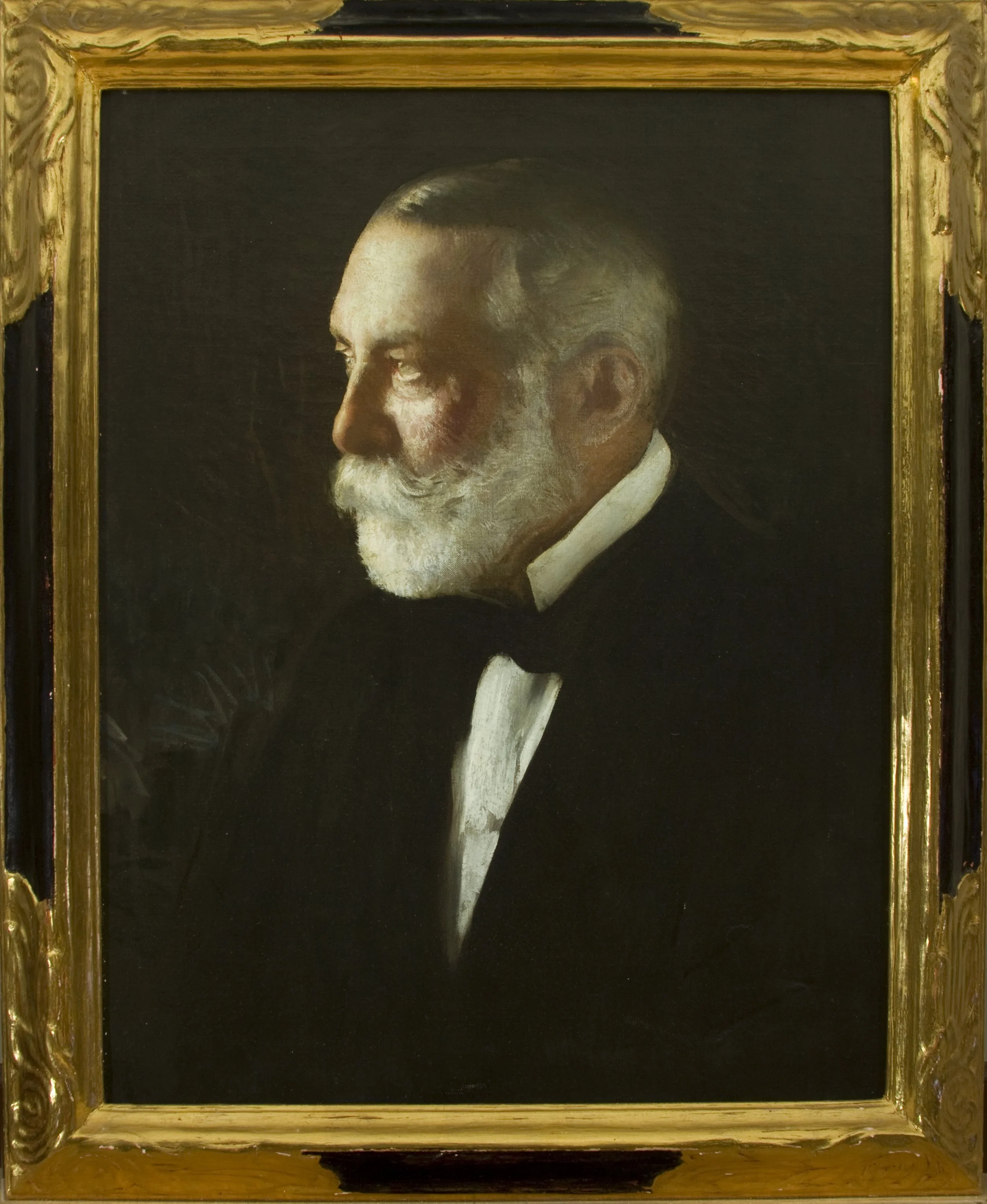
Portrait of Henry Clay Frick by Edmund Charles Tarbell
A Story. A Family. A Living Legacy.
The Tarbell Charitable Trust was founded to preserve and exhibit the works of American Impressionist Edmund Charles Tarbell. One of its greatest discoveries was the concept of fusing the art and legacy of Edmund Charles Tarbell with the Tarbell story that had been waiting to be told.
The Tarbells: Celebrating Our Mohawk and American Story is the Tarbell Charitable Trust's largest initiative to date — a five-year project reuniting the Mohawk and American Tarbell family lines through newly commissioned art, and whose proceeds support the preservation of the Mohawk language for future generations.
One Name. Two Canoes. One River.
In 1707 three Tarbell children were taken from a farm located in Groton, Massachusetts during the Queen Anne's War — a global conflict between France and England that swept thousands of families into its current.
Two of those children — John and Zachariah — were received by a Mohawk community near Montreal. They learned the language. They married in. They were named by clan mothers. By the time anyone came to bring them home, they were already home.
Their descendants became the Mohawk Tarbell line — ten generations of chiefs, elders, language teachers, and artists in the community of Akwesasne.
The elder brother's line — the colonial Tarbell line — remained in Groton. It produced a painter who changed American art, a Trust that preserved his work, and a Trustee who finally asked the question that made the reunion possible.
The Haudenosaunee tradition speaks of the Two Row Wampum — two peoples traveling the same river in their own canoes, side by side, interdependent. That image is the philosophical heart of this exhibition and the Trust's approach to everything it builds.
Two truths. One river. At last, traveling together.
“Our name comes from the English Tarbells. But our identity comes from the Mohawk women.”
“What if we told the whole story?”